
Effective SOP management best practices in 2026 prioritize digital automation, real-time version control, and AI-driven compliance tracking to minimize human error. Organizations must focus on maintaining a centralized cloud repository while integrating continuous training modules to ensure that all team members remain aligned with evolving regulatory standards.
Many organizations still rely on fragmented, manual SOP systems that create significant compliance risks and operational bottlenecks. As regulatory requirements for 2026 become more stringent, the cost of managing procedures through outdated spreadsheets or disconnected file shares is simply too high for modern enterprises to bear. Efficient SOP management is no longer just a checkbox for quality assurance; it is a strategic necessity for maintaining audit readiness and ensuring workforce alignment. In this guide, we will explore the essential best practices for modernizing your document lifecycle. You will learn how to centralize your environment, implement structured collaboration, and automate distribution with electronic signatures. We also address specific regional nuances, such as the Newark and New Jersey regulatory landscape, to ensure your platform choice supports long term compliance and operational excellence.
The Importance of Modernizing SOP Management for 2026 Compliance
Regulated industries like healthcare, pharmaceuticals, and manufacturing are facing a significant shift in regulatory expectations as 2026 approaches. Traditional methods of managing Standard Operating Procedures (SOPs), such as physical binders or unmanaged PDF files on local servers, are no longer adequate for modern demands. These legacy approaches lack the necessary transparency and version control required by oversight bodies such as the FDA, ISO, and GDPR.
Modern SOP management best practices are now defined by the ability to provide a complete, immutable history of every document. By 2026, automation will no longer be an optional luxury for high performing organizations; it is a fundamental requirement for maintaining an "always audit ready" posture. Relying on manual email chains for approvals or spreadsheet logs for distribution tracking introduces unacceptable risks of non-compliance and human error.
As a Newark-based leader in the industry, DocTract offers a specialized cloud solution for professional policy management designed to address these specific challenges. Effective modernization means transforming document processing into a secure, value added operation. This shift ensures that organizations can respond to audits instantly rather than spending weeks gathering evidence. Moving toward a cloud first approach provides the structural integrity needed to survive increasing regulatory scrutiny while improving operational efficiency across the entire enterprise.
Centralize SOPs in a Secure Cloud Environment
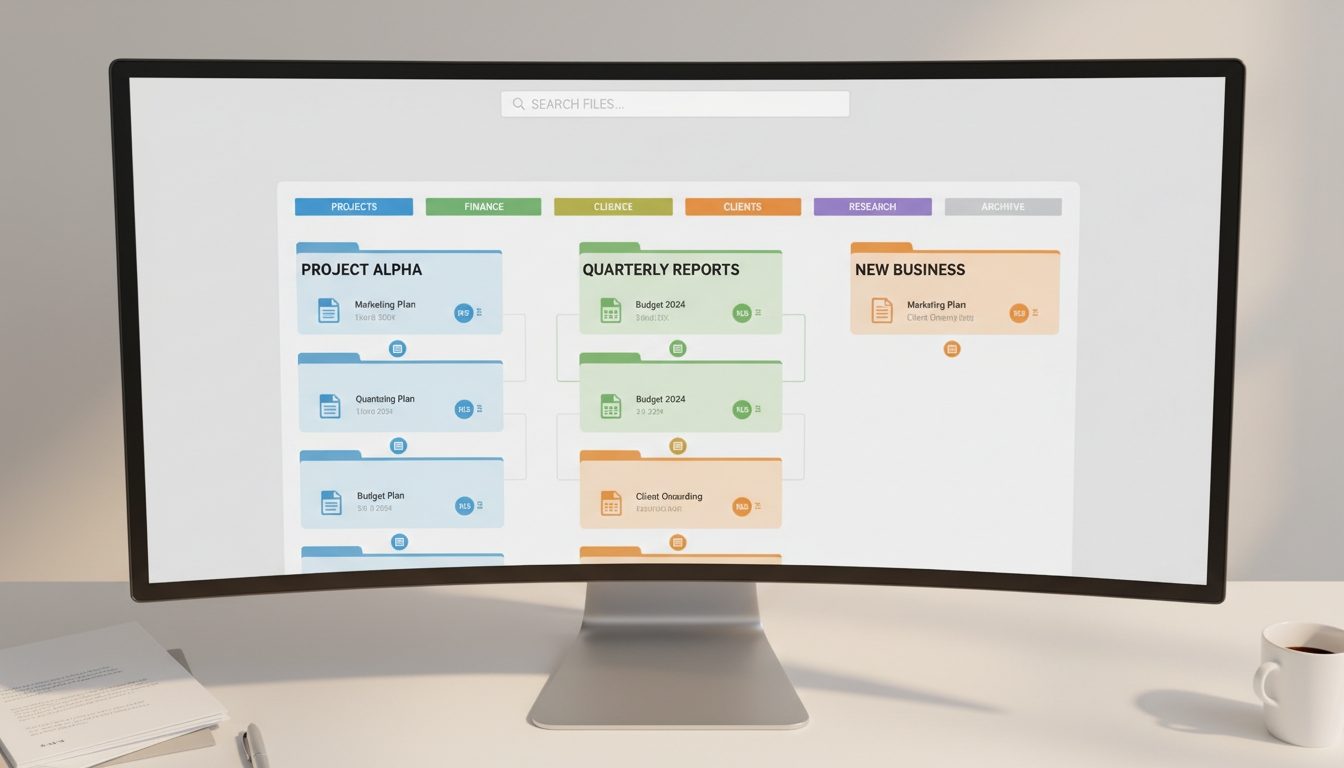
The foundation of effective SOP management best practices begins with the elimination of document silos. In many organizations, critical procedures remain scattered across local hard drives, disparate email threads, and various department-specific shared folders. This fragmentation creates a high-risk environment where employees may unknowingly follow obsolete instructions, a leading cause of compliance failures during regulatory audits.
Transitioning from legacy physical file cabinets or unmanaged network drives to a centralized digital repository establishes a single source of truth. A dedicated cloud solution for professional policy management ensures that every stakeholder, regardless of their physical location, accesses the exact same master document. This is particularly vital for organizations with remote teams or multi-site operations that require instant, secure access to the latest protocols without the delays associated with manual retrieval.
Centralization in a secure cloud environment does more than just organize files; it enforces version control by design. When documents live in a unified space, the danger of version confusion is significantly mitigated. Auditors look for concrete evidence that a firm can control its documentation, and a cloud-based system provides an immutable record of where the active version resides. Modern cloud infrastructure offers the high-level security protocols, such as data encryption and role-based access controls, that traditional on-premise storage or basic file-sharing apps often lack. By consolidating SOPs into one protected environment, organizations move beyond the chaos of manual file tracking and into a structured, scalable framework ready for the 2026 regulatory landscape.
Implement Structured Collaborative Revision Cycles
Centralizing documents is only the first step in modernization. The true challenge lies in the iterative process of drafting and refining those procedures. Applying SOP management best practices requires a structured environment where multiple stakeholders can contribute without compromising document integrity. Organizations should move beyond static editing to a system that utilizes check-in and check-out mechanics. This functionality ensures that while one person is actively editing, the file is locked to others; this prevents the creation of conflicting versions and the subsequent data loss that often occurs in unmanaged environments.
Expert revision cycles rely on a clear distinction between editing and reviewing. Document owners should retain absolute control over the master file while allowing Subject Matter Experts (SMEs) to provide feedback through targeted comments or tracked suggestions. This separation prevents unauthorized changes to critical safety or quality parameters while still capturing essential field-level insights. In a specialized cloud solution for professional policy management, every interaction is logged in the background. This creates a detailed audit trail that identifies who proposed a change, exactly what the modification was, and why it was deemed necessary.
Role | Primary Responsibility | Interaction Level |
|---|---|---|
Document Owner | Finalizes content and manages the master file | Full Edit Access |
Subject Matter Expert | Provides technical accuracy and field insights | Suggested Revisions and Comments |
Quality Assurance | Evaluates compliance and cross-departmental impact | Review and Feedback |
By implementing these structured cycles, organizations ensure that revisions are purposeful and fully documented. This rigorous approach to collaboration eliminates the ambiguity of email-based feedback and provides the transparency required for stringent 2026 regulatory standards. It transforms the revision process from a chaotic administrative task into a controlled, value-added operation.
Streamline Regulatory Approvals with Electronic Signatures

The transition from structured revision cycles to formal authorization is where many organizations encounter a critical operational bottleneck. Relying on physical wet-ink signatures or unmanaged scanned PDFs introduces significant risk and delay into the compliance lifecycle. Adopting electronic signatures for policies ensures that approvals are captured securely and in full compliance with 21 CFR Part 11 and EU Annex 11 standards. These regulations require that electronic signatures are uniquely linked to their respective records and that the system maintains an unalterable audit trail documenting the signer's identity and the date of execution.
Modern SOP management best practices now rely on automated approval levels to eliminate the administrative friction of chasing sign-offs. Instead of a document idling in an email inbox, a specialized cloud solution for professional policy management automatically routes the SOP to the next designated stakeholder in the hierarchy. For example, once a Department Head provides digital authorization, the system immediately notifies Quality Assurance for final verification. This sequential or parallel routing ensures that no mandatory review step is bypassed and that the timeline for implementation remains predictable. By replacing manual follow ups with system driven notifications, organizations significantly shorten the interval between a document's final draft and its official effective date.
Automate Policy Distribution and Acknowledgement Tracking

Finalizing an SOP is a significant milestone; however, the document provides no regulatory value if the relevant personnel remain unaware of its contents. This last mile of the document lifecycle is where many compliance programs falter. Modern SOP management best practices dictate that distribution must be an automated, rule-based event rather than a manual administrative task. By leveraging a cloud solution for professional policy management, organizations can link document categories to specific employee roles or departments. When a new version is published, the system automatically triggers notifications to the correct distribution lists. This ensures that a laboratory technician in a clinical setting or a floor operator in a manufacturing plant receives the update immediately.
Tracking these digital acknowledgments is the only defensible way to prove compliance during an audit. Regulatory inspectors do not merely ask if a policy exists; they demand evidence that the staff responsible for a process have read and understood the current version. Utilizing electronic signatures for policies provides an immutable, timestamped record of receipt. This becomes especially critical for frontline workers who may not spend their day at a computer. Providing a mobile-friendly interface allows these employees to review and acknowledge SOPs directly from a tablet or smartphone, eliminating the need for paper sign-off sheets that are easily lost or misfiled.
Acknowledgment Metric | Significance for Compliance |
|---|---|
Completion Rate | Quantifies organizational readiness and identifies training gaps |
Time-to-Acknowledgment | Measures how quickly new safety or quality data is disseminated |
Individual History | Provides a granular record of an employee’s training path for inspectors |
Automating this process ensures that the transition from an approved status to an active status is seamless. It transforms policy distribution from a passive hope into a verified, trackable business operation that is always ready for inspection.
Maintain Detailed Version History and Audit Readiness

The ability to track these active statuses over time is the cornerstone of regulatory defense. Effective SOP management best practices require more than just a basic version number; they demand a technical audit trail that captures every interaction from inception to retirement. This necessitates an immutable log recording who edited a sentence, who applied electronic signatures for policies, and which specific employees acknowledged the update.
A modern cloud solution for professional policy management utilizes distinct document statuses to eliminate operational ambiguity. This structure ensures that staff only ever interact with the authorized version while maintaining a complete historical record for inspectors.
Status | Operational Definition | Auditor Significance |
|---|---|---|
Draft | Internal development; no operational authority | Demonstrates controlled revision and SME input |
Current | The only active, binding instruction | Confirms compliance and safety at the present moment |
Archived | Superseded versions; retained for history | Proves exactly what was in effect during any past event |
This level of granularity enables "point in time" reporting. If an auditor asks to see the active procedure for a specific date three years ago, the system retrieves the archived version and its associated automated approval levels instantly. This technical precision transforms the audit process from a month long exercise in document hunting into a simple, defensible report generation task.
SOP Management for the Newark and New Jersey Regulatory Landscape
The Newark and North Jersey region serves as a global hub for the life sciences and pharmaceutical sectors. Stretching from Newark down the Route 1 corridor toward Princeton, this geography contains one of the densest concentrations of FDA regulated entities in the world. Organizations operating within this corridor face unique operational pressures. They are often part of a highly interconnected supply chain where a single compliance failure can disrupt regional operations. Adopting SOP management best practices is not just about internal efficiency; it is about meeting the exacting expectations of a local ecosystem that includes major research institutions and global manufacturing headquarters.
Maintaining a cloud solution for professional policy management allows Newark based firms to align with these high tier standards while managing the complexity of multi site facilities. Because of the regional focus on biotechnology and advanced manufacturing, local businesses must utilize electronic signatures for policies and automated approval levels to keep pace with rapid innovation cycles. DocTract, rooted in Newark, understands that the North Jersey regulatory landscape requires a level of technical sophistication that basic document storage cannot provide. This localized expertise ensures that organizations remain compliant with both federal mandates and the specific rigorous standards common to the Jersey life sciences corridor.
Selecting the Right SOP Management Platform for 2026
Selecting a platform for the next era of compliance requires a rigorous evaluation of technical capabilities. Organizations must prioritize a cloud solution for professional policy management that bridges the gap between complex regulatory requirements and user accessibility. To ensure your selection aligns with SOP management best practices, verify that the platform includes these essential features:
Selection Criterion | Requirement for 2026 |
|---|---|
Identity Management | Seamless integration with existing providers via Single Sign-On (SSO). |
System Transparency | A robust, unalterable audit log that tracks all document lifecycle events. |
Operational Agility | Cloud scalability to support multi-site expansions without infrastructure overhead. |
User Experience | Intuitive design for non-technical staff to ensure high adoption rates. |
DocTract provides this exact framework, combining electronic signatures for policies with automated approval levels to deliver a secure, efficient environment for Newark businesses and global organizations alike. By focusing on these specific technical benchmarks, firms can transition from reactive document handling to a proactive, audit ready operation.